
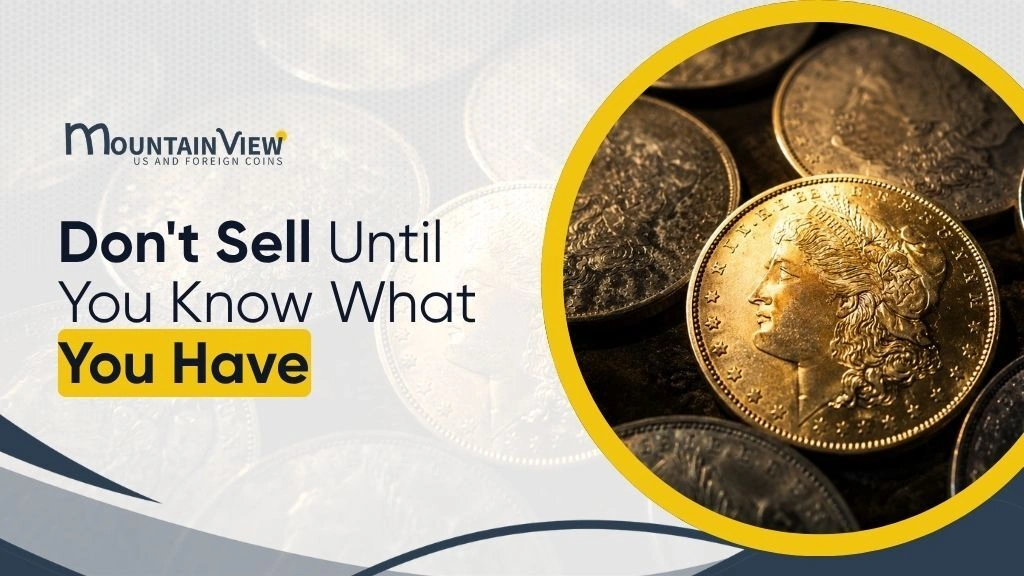
If you have a large coin collection and need to sell it, the single most important thing you can do is get a professional appraisal before you accept any offer. Most sellers lose value not because their coins are worth less, but because they sell to the wrong buyer, in the wrong order, without knowing what they actually have.
The Mistake That Costs Sellers the Most
Before covering what to do, it is worth understanding what goes wrong most often.
Sellers typically lose value in one of three ways: they clean the coins before selling, they sell the entire collection as a single bulk lot to the first buyer they find, or they go to a pawn shop or gold buyer who only pays melt value and ignores numismatic worth entirely.
A Morgan silver dollar in MS-64 condition is worth multiples of its silver melt price. The moment you sell it to someone who only looks at the metal, that numismatic premium disappears. You cannot recover it after the sale is done.
Step 1: Do Not Touch the Coins
This is not a figure of speech. Do not clean, polish, rinse, wipe, or dip any coin before showing it to a buyer or appraiser.
Cleaning is the single most common reason collectors receive below-market offers. Even a light wipe with a cloth creates micro-abrasions visible under magnification. PCGS and NGC graders will label a cleaned coin as a “details” grade, which removes it from the standard grading scale and sharply reduces its market value. A coin that would have graded MS-63 becomes a detailed coin worth a fraction of that price.
Step 2: Sort Before You Seek Offers
You do not need to be an expert to do a basic sort. Organize the collection into these groups:
Certified coins (coins already in PCGS, NGC, or CAC holders) have a known, verifiable grade and can be looked up in published price guides immediately.
Key date and semi-key date coins suspect may be valuable based on the date and mint mark. These warrant individual attention from a qualified numismatist.
90% silver coins, pre-1965 US dimes, quarters, and half dollars have silver content value regardless of collector grade.
Common date circulated coins trade close to melt or face value and should be counted by weight or denomination rather than individually priced.
Foreign coins and world coins set these aside separately. They require a different buyer or platform.
This sort takes an afternoon for a mid-size collection and gives any buyer or appraiser a clear picture of what they are looking at. It also protects you from having a key date coin lumped in with common material and priced accordingly.
Step 3: Get an Independent Appraisal First
Never accept the first offer you receive without understanding what your collection contains.
An independent appraisal from a credentialed numismatist gives you a baseline. Look for ANA member dealers, as ANA membership requires adherence to a published code of ethics. PCGS and NGC authorized submitters have demonstrated a working relationship with the two largest third-party grading services in the country, which signals professional seriousness. For collections with significant numismatic value, this matters because it keeps the coins in your control until the moment of sale.
A note on “free appraisals” from buyers: An appraisal offered by someone who is also trying to buy the collection is not truly independent. It is an offer dressed up as information. Use it as a data point, not as the final word on value.
Step 4: Match the Selling Channel to the Coin Type
Not all coins belong in the same selling channel. Using the wrong channel for the wrong coins is where most avoidable value loss happens.
Coin Type | Best Channel | Why |
PCGS/NGC certified high-grade coins | Auction or specialist dealer | Competitive bidding captures the full numismatic premium |
90% silver common date coins | Local coin dealer or coin buyer | Fast, fair, priced against live silver spot |
Raw key dates (ungraded) | Submit to PCGS/NGC first, then sell | Grading unlocks premium pricing for the right coins |
Foreign and world coins | Specialist dealer or online numismatic platforms | General buyers discount unfamiliar material |
Bulk common date circulated | Coin dealer by weight | Individual pricing is not worth the time |
Submitting a raw key date coin for PCGS or NGC certification before selling is a judgment call. The cost runs from $25 to $65 per coin plus shipping, and results take several weeks. For coins likely to grade MS-63 or above, the increased sale price typically justifies the expense. For lower-grade coins, it usually does not.
Step 5: Get Multiple Offers on High-Value Pieces
For any individual coin or group of coins worth $500 or more, get at least two independent offers before accepting one. Coin dealers operate on margin. Their offer will be below retail, which is fair and expected. But there is a wide range in how dealers price material, and the spread between the lowest and highest offer on a significant coin can be substantial.
Coin shows are one of the most efficient places to do this. Multiple dealers are present in the same room, and you can shop a single coin to several buyers in an hour. The ANA hosts national shows, and regional shows take place throughout the Bay Area and Northern California each year.
For very high-value collections, numismatic auction houses offer access to the widest possible buyer pool, which is where true competitive pricing happens. Auction commission rates typically run between 10% and 20%, but on coins where bidding competition is strong, realized prices can exceed what any single dealer would pay outright.
What Drives Value Loss: A Summary
Most coin collection liquidations that end in regret share the same root causes:
Selling to a non-specialist buyer who prices everything at melt. Accepting a bulk offer that averages down the value of the best coins in the collection. Cleaning coins before the sale. Not knowing which coins warranted individual attention. Moving too fast under financial or estate pressure without first establishing what the collection actually contains. None of these is unavoidable. Each one has a straightforward remedy built into the steps above.
Work With a Local Coin Specialist
For collectors and families in Mountain View, Sunnyvale, Cupertino, Palo Alto, Santa Clara, and Milpitas, working with a local coin appraiser and buyer means the collection never has to leave your hands until the sale is final. No shipping risk, no waiting, no dealing with an out-of-state company you found online.
Mountain View US and Foreign Coins serves the Bay Area with in-person coin appraisals, estate collection evaluations, and direct purchasing. The company is an ANA member and an authorized submitter for PCGS and NGC, which means coins that warrant professional grading can be submitted directly without the seller having to manage that process independently.
Frequently Asked Questions
Should I clean my coins before selling them? No. Cleaning reduces grade and market value. Original surfaces are preferred by collectors and graders alike.
Is it better to sell a coin collection to a dealer or at auction? It depends on the coins. High-grade certified coins often perform better at auction. Common date and silver coins move faster and more efficiently through a local dealer.
How do I know if my coins need to be graded before selling? If a coin appears to be in uncirculated or near-uncirculated condition and is a recognized key date or scarce issue, professional grading will likely increase the sale price enough to justify the cost.
What does a coin appraiser look for? Grade and condition, date and mint mark, whether the coin has been cleaned or altered, current market demand, and whether it is certified by a third-party grading service.